

Smoking a whole brisket low and slow is an art form that requires patience, skill, and dedication. The result? Tender, juicy, and flavorful meat that will have your taste buds singing with delight. In this guide, we will walk you through the steps to achieve barbecue perfection, from selecting the right brisket to mastering the art of maintaining a consistent low temperature for hours on end. Get ready to elevate your BBQ game and impress your friends and family with the most mouthwatering brisket they’ve ever tasted.
Selecting the Brisket
When selecting a brisket for smoking, it is essential to choose a high-quality cut of meat. Look for a brisket with good marbling, which will help keep the meat moist and flavorful during the smoking process. Opt for a brisket that has a thick flat and a generous fat cap on top. The fat cap will render down during smoking, adding flavor and moisture to the meat. Additionally, ensure the brisket is fresh and has a deep red color, indicating freshness.
Consider the size of the brisket based on your needs. A larger brisket will take longer to smoke but can feed a larger number of people. Conversely, a smaller brisket will cook faster and is more manageable for smaller gatherings. Choose a brisket that fits your smoker comfortably, allowing for proper air circulation and even cooking. Remember that selecting the right brisket is the first step towards achieving a delicious and tender smoked brisket.
3. Trimming the Brisket
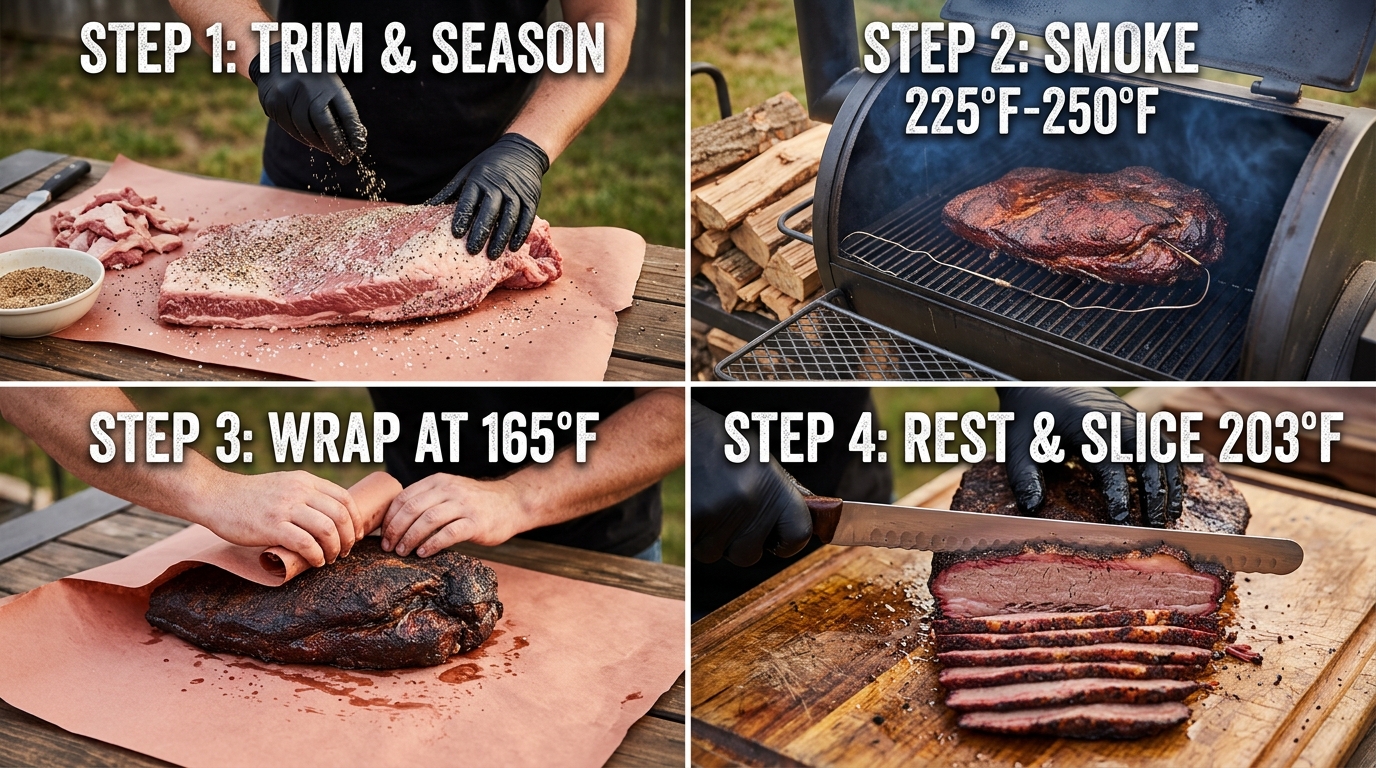
Trimming the brisket is a crucial step in the preparation process to ensure even cooking and a better final result. Start by removing excess fat from both sides of the brisket, leaving about ¼ inch of fat to keep the meat moist during the smoking process. Trimming off the fat also allows the seasonings to penetrate the meat more effectively.
Next, square off the edges of the brisket to promote even cooking. This helps prevent the thinner parts from drying out before the thicker sections are fully cooked. Additionally, removing any silver skin or tough connective tissue from the surface of the meat can enhance the texture and tenderness of the final product. Remember, while it’s important to trim the brisket, be mindful not to remove too much fat, as it contributes to flavor and juiciness.
4. Seasoning the Brisket
Seasoning the brisket is a crucial step in the smoking process. The seasoning enhances the flavor of the meat and contributes significantly to the final taste of the brisket. To begin, generously coat the brisket with a dry rub or marinade of your choice. The rub can be a simple mixture of salt, pepper, garlic powder, and onion powder, or a more complex blend of spices and herbs tailored to your taste preferences.
Ensure that the seasoning is applied evenly on all sides of the brisket, including the fat cap. The seasoning should adhere to the meat to form a flavorful crust during the smoking process. Allow the brisket to sit for some time after seasoning to allow the flavors to penetrate the meat. This resting period allows the spices to meld with the meat, enhancing the overall taste of the finished brisket.
Preparing the Smoker
Setting up the smoker: Before you start smoking the brisket, it’s crucial to prepare your smoker properly. Make sure the smoker is clean and free of any residue from previous use. Check that the vents are open and working correctly to regulate airflow throughout the smoking process. Additionally, ensure you have enough fuel, whether charcoal, wood chips, or pellets, to maintain a consistent temperature throughout the cooking time.
Temperature control: Maintaining the right temperature in the smoker is key to achieving a perfectly smoked brisket. Aim for a temperature range between 225-250 degrees Fahrenheit (107-121 degrees Celsius) for low and slow cooking. Use a reliable thermometer to monitor the smoker’s temperature consistently. Adjust the vents and fuel as needed to keep the heat steady throughout the smoking process. Remember, patience is essential when smoking a brisket, so resist the urge to open the smoker frequently as it can cause temperature fluctuations.
6. Smoking the Brisket
Smoking the brisket is a crucial step in the process of achieving tender and flavorful meat. Once the smoker is at the desired temperature, carefully place the seasoned brisket on the grates, fat side up. Maintain a consistent temperature throughout the smoking process, typically around 225-250 degrees Fahrenheit. Depending on the size of the brisket, smoking can take several hours to even a full day. It’s important to periodically check the smoker to ensure the temperature remains steady and to add more wood chips or chunks for continuous smoke production.
During the smoking process, the brisket will slowly absorb the smoky flavor, and the collagen in the meat will break down, resulting in a tender texture. Some pitmasters prefer to wrap the brisket in foil or butcher paper halfway through the cooking process to help retain moisture and accelerate the cooking time. The brisket is ready when it reaches an internal temperature of around 195-205 degrees Fahrenheit, and it should have a nice bark on the outside. Once done, remove the brisket from the smoker, wrap it in foil, and let it rest for at least 30 minutes before slicing and serving to allow the juices to redistribute for a juicy and delicious brisket.
Resting and Serving the Brisket
Resting the Brisket: After smoking the brisket to perfection, it is crucial to allow it to rest before slicing and serving. Resting the brisket helps redistribute the juices, resulting in a more tender and flavorful final product. To rest the brisket, carefully remove it from the smoker and wrap it in butcher paper or aluminum foil. Let it rest for at least 30 minutes to an hour in a warm, insulated cooler or a turned-off oven. This resting period is essential for achieving optimal tenderness.
Serving the Brisket: Once the brisket has rested, it is time to slice and serve this delicious dish to your eager guests. Use a sharp knife to slice the brisket against the grain into thin, even slices. Arrange the slices on a platter or serving dish, and be prepared for the flavorful aroma to entice everyone around. Brisket is often served with traditional sides like coleslaw, baked beans, cornbread, or pickles. Whether serving at a backyard barbecue or a special gathering, a perfectly rested and sliced brisket is sure to be a crowd-pleaser.